

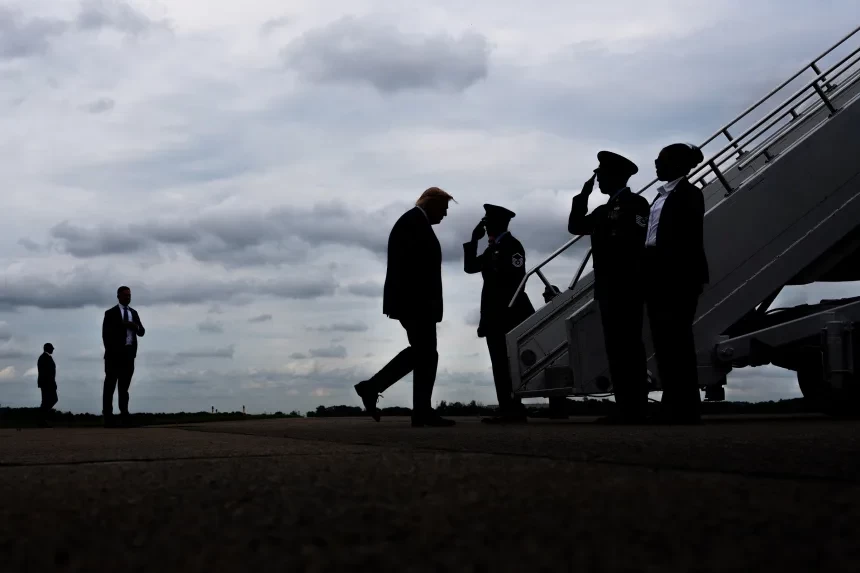
Trump Wants to Win the Iran War Without Firing Another Missile
The bombs haven't forced Iran to surrender.
Diplomacy hasn't produced a breakthrough.
Now Donald Trump is betting that economic pressure can finish what military force could not.
The president has announced what he describes as the most aggressive economic operation ever imposed on a country, targeting everything from Iranian oil smuggling and financial networks to companies, airports and governments accused of keeping Tehran's economy alive.
It is a dramatic change in strategy—and potentially one of the most consequential bets of Trump's presidency.
But there is one problem.
Iran has survived sanctions before.
A New Battlefield: Iran's Economy
Trump's latest campaign is designed to attack the financial arteries keeping Iran afloat.
The administration is targeting oil sales, financial transfers, exchange houses, front companies and shipping networks that Tehran has relied on to evade international sanctions.
The goal is straightforward: make it increasingly expensive for Iran to finance its government, military and regional operations until its leaders decide that continuing the confrontation with Washington is no longer sustainable.
But economic warfare does not produce results overnight.
And that creates a challenge for a president known for demanding quick victories.
Tehran Has Already Shown It Can Endure
Iran's economy has spent years under heavy international sanctions.
The country has developed extensive networks for moving oil, accessing foreign currency and maintaining trade despite restrictions.
That does not mean sanctions cannot hurt.
They can drive inflation higher, weaken the currency, reduce government revenue and increase pressure on businesses and ordinary households.
The question is whether that pain will translate into political capitulation.
Some analysts remain deeply skeptical.
Daniel Citrinowicz, a former Israeli intelligence official who specialized in Iran, told CNN that Tehran's calculations may not change simply because economic pressure becomes more severe.
Iran's leaders have repeatedly demonstrated a willingness to absorb significant economic costs in pursuit of strategic goals.
The Strait of Hormuz Changes Everything
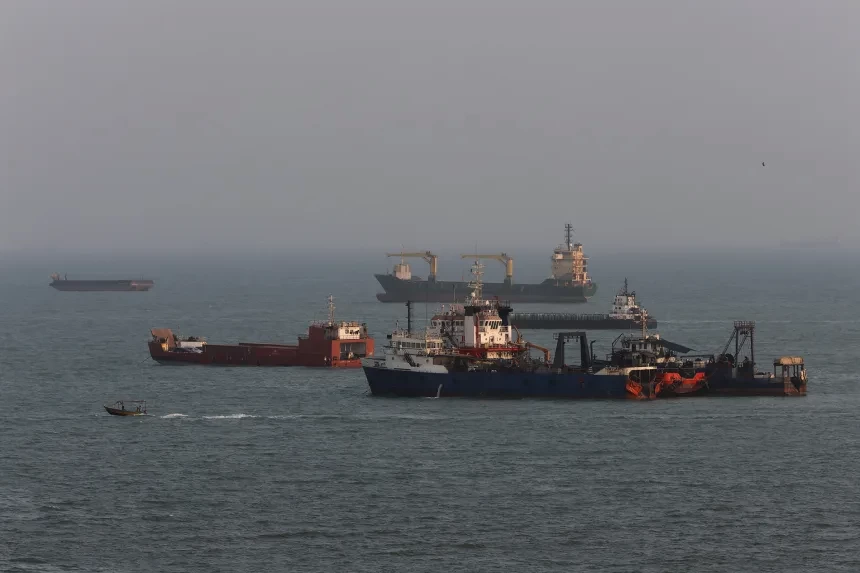
Then there is the Strait of Hormuz.
The narrow waterway has become one of the most powerful pressure points in the conflict, with disruptions to shipping threatening to push energy prices higher and create economic pain far beyond Iran's borders.
Washington wants to use control over maritime traffic to squeeze Tehran.
But every move in the strait carries a second risk: the pressure can come back around to American consumers.
Higher oil prices mean more expensive gasoline.
Higher transportation costs can push up food prices.
And if the disruption lasts long enough, businesses and households across the United States could begin feeling the effects.
That gives Tehran a potential weapon of its own.
China Could Become the Biggest Test
A truly effective economic blockade would require more than Washington simply imposing new sanctions.
Iran has spent years building alternative trading routes and financial channels, and China remains a major buyer of Iranian oil.
That puts the Trump administration in a difficult position.
Washington could attempt to pressure Chinese banks and companies involved in Iranian oil transactions.
But Trump is also preparing for a major diplomatic engagement with Chinese President Xi Jinping.
Punishing Chinese financial institutions while trying to maintain a stable relationship with Beijing would create a complicated foreign-policy balancing act.
The success of Trump's Iran strategy may therefore depend partly on whether he can persuade other countries to enforce pressure that the United States cannot impose alone.
The Clock Is Political, Too
There is another deadline hanging over the strategy: the U.S. midterm elections.
Trump's political position could become increasingly vulnerable if the economic consequences of the conflict reach American households.
Iran does not necessarily need to defeat the United States militarily to make the war politically painful.
A sustained disruption to shipping could push energy prices higher.
Higher prices could frustrate voters.
And frustrated voters could turn the economic consequences of the war into a domestic political liability for the White House.
That creates a dangerous dilemma for Trump.
If Iran escalates and he responds militarily, the conflict could become even more expensive.
If he refuses to respond, his opponents could portray the administration as weak.
The Strategy Requires Something Trump Has Rarely Been Known For
Economic warfare is a game of patience.
Military strikes can produce an immediate headline. Sanctions may take months or even years to fundamentally change a government's calculations.
That means Trump may have to maintain pressure long after the initial political excitement surrounding his announcement fades.
He would also need allies, financial institutions and major trading partners to stay aligned with Washington's strategy.
That could prove difficult.
The administration's previous clashes with allies have already complicated international cooperation, while threats against countries unwilling to fully support Washington's approach risk making the coalition even harder to build.
The Real Question Isn't Whether Iran Will Suffer
Iran is almost certain to face greater economic pressure.
The harder question is whether Iranian leaders will suffer enough to change course before American voters decide they have had enough.
That is the gamble now facing Trump.
His new strategy could eventually force Tehran back to negotiations—or create another prolonged confrontation in which neither side can easily retreat.
For now, the bombs may have gone quiet.
But Washington and Tehran are still fighting.
The battlefield has simply moved from the skies over Iran to the banks, oil markets and shipping lanes that connect the global economy.


Reader discussion
Comments 0
No comments yet. Be the first to join the conversation.