
Full Story
In a revelation that could reshape global perceptions of Iran’s recent unrest, U.S. President Donald Trump has claimed that Washington supplied weapons to Iranian opposition groups during the mass protests that rocked the country late last year.
The remarks, delivered during a phone interview with Fox News correspondent Trey Yingst, suggest a level of U.S. involvement far deeper than previously acknowledged—raising urgent questions about the true nature of the demonstrations and the geopolitical forces behind them.
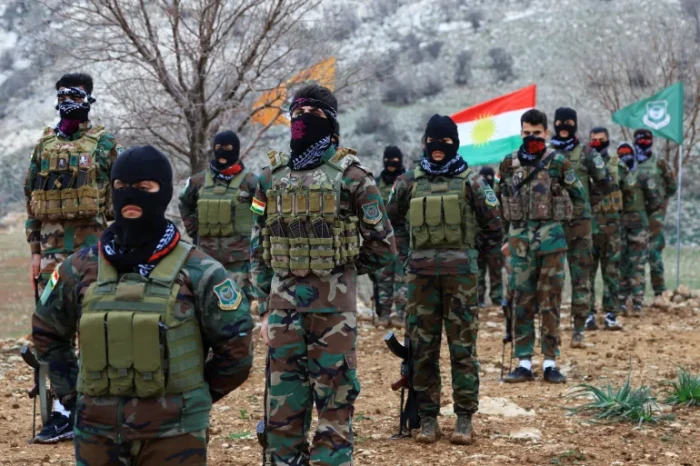
“We sent them a lot of guns… we sent them to the Kurds,” Trump reportedly said, adding that weapons were also provided directly to protesters.
These claims come against the backdrop of an escalating conflict. As the joint U.S.-Israel military campaign against Iran entered its 38th day, the human toll has been staggering—over 2,000 dead and tens of thousands injured.
A Protest Movement—or Something More?
What began on December 28 as small-scale protests among Tehran shopkeepers—angered by economic collapse and a plunging currency—quickly spiraled into a nationwide uprising. Within days, hundreds of thousands took to the streets across Iran, some calling openly for regime change.
The government’s response was swift—and brutal.
Human rights organizations report that thousands, many of them young, were killed during violent crackdowns in early January. Mass arrests followed. Internet access was cut nationwide, plunging Iran into an information blackout.
According to UN estimates, the death toll may have reached as high as 20,000.
Tehran’s Narrative Gains Traction
From the beginning, Iranian authorities insisted the protests were not organic. Supreme Leader Ali Khamenei accused the United States and Israel of orchestrating unrest through “foreign-backed terrorists.”
At the time, these claims were widely dismissed by critics as propaganda.
Now, Trump’s own words may be giving them new credibility.
Khamenei had gone as far as calling Trump a “criminal,” alleging direct involvement in destabilizing Iran. Officials later claimed that thousands—including hundreds of security personnel—were killed by armed groups during the chaos, particularly in Kurdish regions long known for unrest.
Washington’s Mixed Signals
Throughout the crisis, Trump issued a series of increasingly aggressive messages toward Tehran. On social media, he warned that the U.S. was “locked and loaded” and ready to act if Iran continued to target protesters.
At one point, he told demonstrators: “Help is on its way.”
Following U.S. and Israeli airstrikes on February 28, Trump framed the military campaign as both a strategic move against Iran’s nuclear ambitions and a moral response to the government’s violent repression.
“We are giving you what you want,” he said, addressing the Iranian people.
Denials, Doubts, and Deepening Uncertainty
Despite Trump’s claims, Kurdish opposition groups have strongly denied receiving any weapons from Washington.
A senior official from the Democratic Party of Iranian Kurdistan dismissed the statements as “baseless,” insisting their arsenal predates the current regime and was not supplied by the U.S. Similarly, the Komala Party rejected any suggestion of foreign arms support.
Analysts remain cautious.
Experts like Neil Quilliam of Chatham House warn that Trump’s often contradictory statements make it difficult to separate fact from rhetoric. Still, many acknowledge that covert support for opposition movements would not be unprecedented in U.S. foreign policy.
A Dangerous Ripple Effect
Whether factual or exaggerated, Trump’s comments may already be having consequences.
They risk deepening divisions within Iran’s already fragmented opposition—and could undermine their legitimacy both domestically and internationally. More critically, they may strengthen Tehran’s narrative that dissent is driven not by genuine public anger, but by foreign manipulation.
In a region already on edge, words alone may be enough to shift alliances, justify crackdowns, and escalate conflict.
And now, one question looms larger than ever:
Was the uprising in Iran truly a grassroots revolt—or part of a far more complex and dangerous game?